
- Học kỳ
- SU2026
- Thời Gian
- 26/7/26
- Loại tài liệu
- FE
- Campus
- Hà Nội
LOG321 SU26 FE
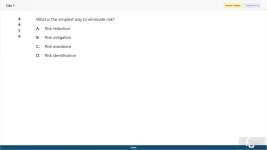
1. (Choose 1 answer)
What is the simplest way to eliminate risk?
A. Risk reduction
B. Risk mitigation
C. Risk avoidance
D. Risk identification
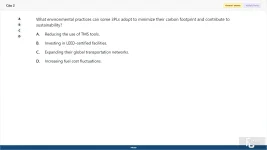
2. (Choose 1 answer)
What environmental practices can some 3PLs adopt to minimize their carbon footprint and contribute to sustainability?
A. Reducing the use of TMS tools.
B. Investing in LEED-certified facilities.
C. Expanding their global transportation networks.
D. Increasing fuel cost fluctuations.
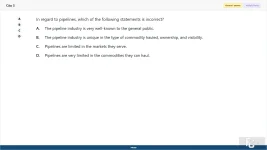
3. (Choose 1 answer)
In regard to pipelines, which of the following statements is incorrect?
A. The pipeline industry is very well-known to the general public.
B. The pipeline industry is unique in the type of commodity hauled, ownership, and visibility.
C. Pipelines are limited in the markets they serve.
D. Pipelines are very limited in the commodities they can haul.
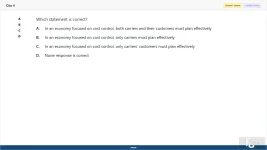
4. (Choose 1 answer)
Which statement is correct?
A. In an economy focused on cost control, both carriers and their customers must plan effectively
B. In an economy focused on cost control, only carriers must plan effectively
C. In an economy focused on cost control, only carriers' customers must plan effectively
D. None response is correct
5. (Choose 1 answer)
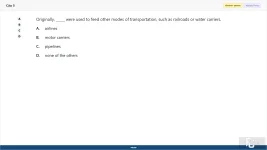
Originally, _____ were used to feed other modes of transportation, such as railroads or water carriers.
A. airlines
B. motor carriers
C. pipelines
D. none of the others
6. (Choose 1 answer)
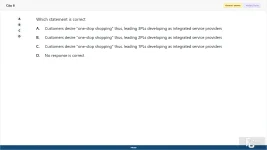
Which statement is correct
A. Customers desire "one-stop shopping" thus, leading 3PLs developing as integrated service providers
B. Customers desire "one-stop shopping" thus, leading 2PLs developing as integrated service providers
C. Customers desire "one-stop shopping" thus, leading 1PLs developing as integrated service providers
D. No response is correct
7. (Choose 1 answer)
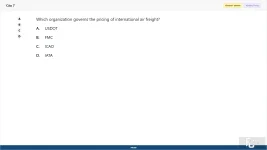
Which organization governs the pricing of international air freight?
A. USDOT
B. FMC
C. ICAO
D. IATA
8. (Choose 1 answer)
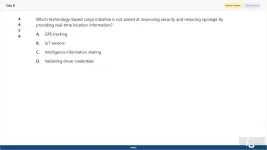
Which technology-based cargo initiative is not aimed at improving security and reducing spoilage by providing real-time location information?
A. GPS tracking
B. IoT sensors
C. Intelligence information sharing
D. Validating driver credentials
9. (Choose 1 answer)
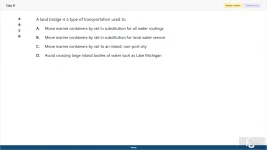
A land bridge is a type of transportation used to:
A. Move marine containers by rail in substitution for all water routings
B. Move marine containers by rail in substitution for local water service
C. Move marine containers by rail to an inland, non-port city
D. Avoid crossing large inland bodies of water such as Lake Michigan
10. (Choose 1 answer)
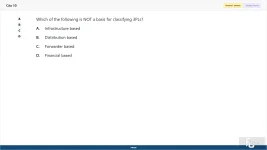
Which of the following is NOT a basis for classifying 3PLs?
A. Infrastructure based
B. Distribution based
C. Forwarder based
D. Financial based
11. (Choose 1 answer)
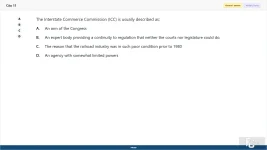
The Interstate Commerce Commission (ICC) is usually described as:
A. An arm of the Congress
B. An expert body providing a continuity to regulation that neither the courts nor legislature could do.
C. The reason that the railroad industry was in such poor condition prior to 1980
D. An agency with somewhat limited powers
12. (Choose 1 answer)
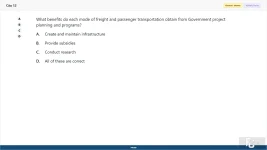
What benefits do each mode of freight and passenger transportation obtain from Government project planning and programs?
A. Create and maintain infrastructure
B. Provide subsidies
C. Conduct research
D. All of these are correct
13. (Choose 1 answer)
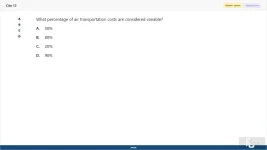
What percentage of air transportation costs are considered variable?
A. 50%
B. 80%
C. 20%
D. 90%
14. (Choose 1 answer)
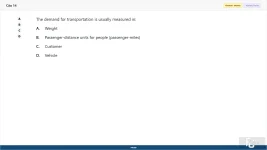
The demand for transportation is usually measured in:
A. Weight
B. Passenger-distance units for people (passenger-miles)
C. Customer
D. Vehicle
15. (Choose 1 answer)
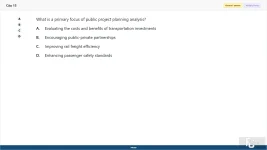
What is a primary focus of public project planning analysis?
A. Evaluating the costs and benefits of transportation investments
B. Encouraging public-private partnerships
C. Improving rail freight efficiency
D. Enhancing passenger safety standards
16. (Choose 1 answer)
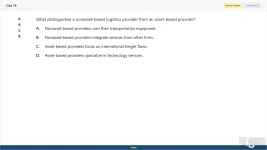
What distinguishes a nonasset-based logistics provider from an asset-based provider?
A. Nonasset-based providers own their transportation equipment.
B. Nonasset-based providers integrate services from other firms.
C. Asset-based providers focus on international freight flows
D. Asset-based providers specialize in technology services.
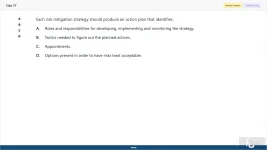
17. (Choose 1 answer)
Each risk mitigation strategy should produce an action plan that identifies:
A. Roles and responsibilities for developing, implementing and monitoring the strategy.
B. Tactics needed to figure out the planned actions.
C. Appointments.
D. Options present in order to have risks least acceptable.
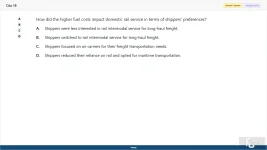
18. (Choose 1 answer)
How did the higher fuel costs impact domestic rail service in terms of shippers' preferences?
A. Shippers were less interested in rail intermodal service for long-haul freight.
B. Shippers switched to rail intermodal service for long-haul freight.
C. Shippers focused on air carriers for their freight transportation needs.
D. Shippers reduced their reliance on rail and opted for maritime transportation.
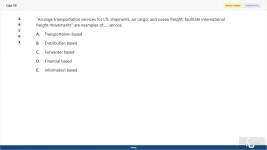
19. (Choose 1 answer)
"Arrange transportation services for LTL shipments, air cargo, and ocean freight; facilitate international freight movements" are examples of..... service.
A. Transportation based
B. Distribution based
C. Forwarder based
D. Financial based
E. Information based
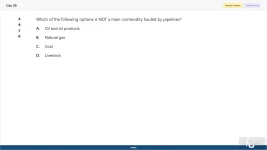
20. (Choose 1 answer)
Which of the following options is NOT a main commodity hauled by pipelines?
A. Oil and oil products
B. Natural gas
C. Coal
D. Livestock
21. (Choose 1 answer)
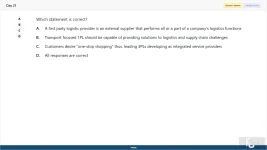
Which statement is correct?
A. A first party logistic provider is an external supplier that performs all or a part of a company's logistics functions
B. Transport focused 1PL should be capable of providing solutions to logistics and supply chain challenges
C. Customers desire "one-stop shopping" thus, leading 3PLs developing as integrated service providers
D. All responses are correct
22. (Choose 1 answer)
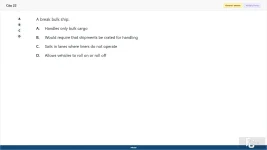
A break bulk ship:
A. Handles only bulk cargo
B. Would require that shipments be crated for handling
C. Sails in lanes where liners do not operate
D. Allows vehicles to roll on or roll off
23. (Choose 1 answer)
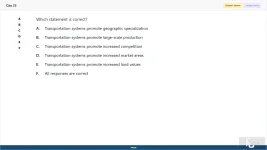
Which statement is correct?
A. Transportation systems promote geographic specialization
B. Transportation systems promote large-scale production
C. Transportation systems promote increased competition
D. Transportation systems promote increased market areas
E. Transportation systems promote increased land values
F. All responses are correct
24. (Choose 1 answer)
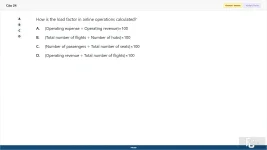
How is the load factor in airline operations calculated?
A. (Operating expense ÷ Operating revenue)×100
B. (Total number of flights ÷ Number of hubs)×100
C. (Number of passengers ÷ Total number of seats)×100
D. (Operating revenue ÷ Total number of flights)×100
25. (Choose 1 answer)
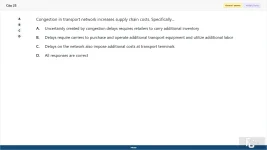
Congestion in transport network increases supply chain costs. Specifically...
A. Uncertainty created by congestion delays requires retailers to carry additional inventory
B. Delays require carriers to purchase and operate additional transport equipment and utilize additional labor
C. Delays on the network also impose additional costs at transport terminals
D. All responses are correct
26. (Choose 1 answer)
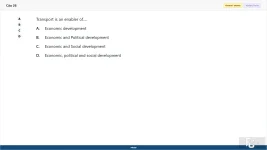
Transport is an enabler of....
A. Economic development
B. Economic and Political development
C. Economic and Social development
D. Economic, political and social development
27. (Choose 1 answer)
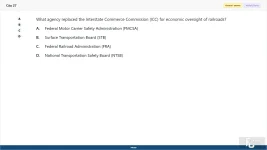
What agency replaced the Interstate Commerce Commission (ICC) for economic oversight of railroads?
A. Federal Motor Carrier Safety Administration (FMCSA)
B. Surface Transportation Board (STB)
C. Federal Railroad Administration (FRA)
D. National Transportation Safety Board (NTSB)
28. (Choose 1 answer)
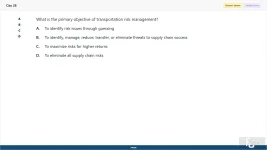
What is the primary objective of transportation risk management?
A. To identify risk issues through guessing
B. To identify, manage, reduce, transfer, or eliminate threats to supply chain success
C. To maximize risks for higher returns
D. To eliminate all supply chain risks
29. (Choose 1 answer)
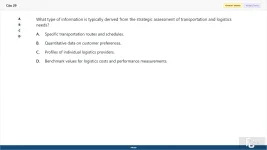
What type of information is typically derived from the strategic assessment of transportation and logistics needs?
A. Specific transportation routes and schedules.
B. Quantitative data on customer preferences.
C. Profiles of individual logistics providers.
D. Benchmark values for logistics costs and performance measurements.
30. (Choose 1 answer)
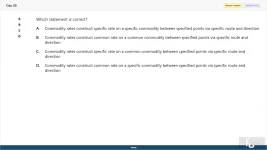
Which statement is correct?
A. Commodity rates construct specific rate on a specific commodity between specified points via specific route and direction
B. Commodity rates construct common rate on a common commodity between specified points via specific route and direction
C. Commodity rates construct specific rate on a common commodity between specified points via specific route and direction
D. Commodity rates construct common rate on a specific commodity between specified points via specific route and direction
31. (Choose 1 answer)
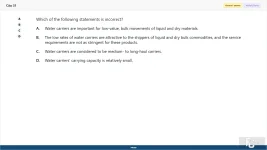
Which of the following statements is incorrect?
A. Water carriers are important for low-value, bulk movements of liquid and dry materials.
B. The low rates of water carriers are attractive to the shippers of liquid and dry bulk commodities, and the service requirements are not as stringent for these products.
C. Water carriers are considered to be medium- to long-haul carriers.
D. Water carriers' carrying capacity is relatively small.
32. (Choose 1 answer)
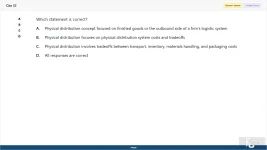
Which statement is correct?
A. Physical distribution concept focused on finished goods or the outbound side of a firm's logistic system
B. Physical distribution focuses on physical distribution system costs and tradeoffs
C. Physical distribution involves tradeoffs between transport, inventory, materials handling, and packaging costs
D. All responses are correct
33. (Choose 1 answer)
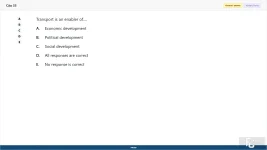
Transport is an enabler of....
A. Economic development
B. Political development
C. Social development
D. All responses are correct
E. No response is correct
34. (Choose 1 answer)
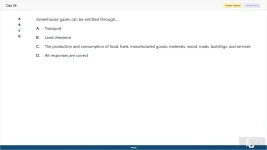
Greenhouse gases can be emitted through....
A. Transport
B. Land clearance
C. The production and consumption of food, fuels, manufactured goods, materials, wood, roads, buildings, and services
D. All responses are correct
35. (Choose 1 answer)
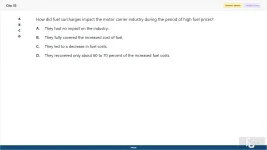
How did fuel surcharges impact the motor carrier industry during the period of high fuel prices?
A. They had no impact on the industry.
B. They fully covered the increased cost of fuel.
C. They led to a decrease in fuel costs.
D. They recovered only about 60 to 70 percent of the increased fuel costs.
36. (Choose 1 answer)
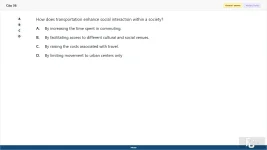
How does transportation enhance social interaction within a society?
A. By increasing the time spent in commuting.
B. By facilitating access to different cultural and social venues.
C. By raising the costs associated with travel.
D. By limiting movement to urban centers only
37. (Choose 1 answer)
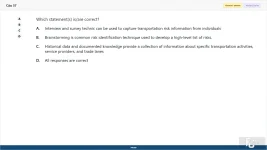
Which statement(s) is/are correct?
A. Interview and survey technic can be used to capture transportation risk information from individuals
B. Brainstorming is common risk identification technique used to develop a high-level list of risks.
C. Historical data and documented knowledge provide a collection of information about specific transportation activities, service providers, and trade lanes
D. All responses are correct
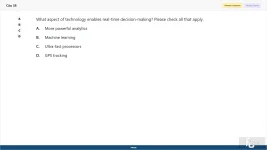
38. (Choose 3 answers)
What aspect of technology enables real-time decision-making? Please check all that apply.
A. More powerful analytics
B. Machine learning
C. Ultra-fast processors
D. GPS tracking
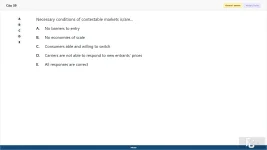
39. (Choose 1 answer)
Necessary conditions of contestable markets is/are...
A. No barriers to entry
B. No economies of scale
C. Consumers able and willing to switch
D. Carriers are not able to respond to new entrants' prices
E. All responses are correct
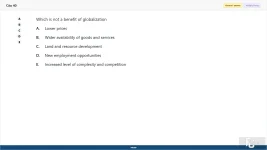
40. (Choose 1 answer)
Which is not a benefit of globalization
A. Lower prices
B. Wider availability of goods and services
C. Land and resource development
D. New employment opportunities
E. Increased level of complexity and competition
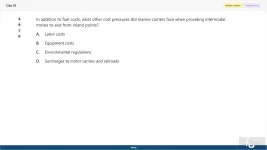
41. (Choose 1 answer)
In addition to fuel costs, what other cost pressures did marine carriers face when providing intermodal moves to and from inland points?
A. Labor costs
B. Equipment costs
C. Environmental regulations
D. Surcharges to motor carriers and railroads
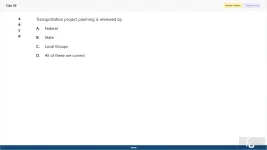
42. (Choose 1 answer)
Transportation project planning is reviewed by
A. Federal
B. State
C. Local Groups
D. All of these are correct
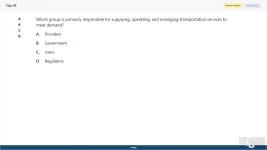
43. (Choose 1 answer)
Which group is primarily responsible for supplying, operating, and managing transportation services to meet demand?
A. Providers
B. Government
C. Users
D. Regulators
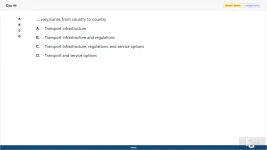
44. (Choose 1 answer)
.....vary/varies from country to country
A. Transport infrastructure
B. Transport infrastructure and regulations
C. Transport infrastructure, regulations, and service options
D. Transport and service options
45. (Choose 1 answer)
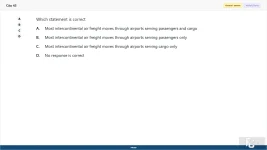
Which statement is correct
A. Most intercontinental air freight moves through airports serving passengers and cargo
B. Most intercontinental air freight moves through airports serving passengers only
C. Most intercontinental air freight moves through airports serving cargo only
D. No response is correct
46. (Choose 1 answer)
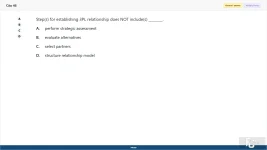
Step(s) for establishing 3PL relationship does NOT include(s) ________.
A. perform strategic assessment
B. evaluate alternatives
C. select partners
D. structure relationship model
47. (Choose 1 answer)
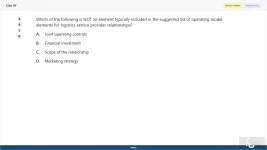
Which of the following is NOT an element typically included in the suggested list of operating model elements for logistics service provider relationships?
A. Joint operating controls
B. Financial investment
C. Scope of the relationship
D. Marketing strategy
48. (Choose 1 answer)
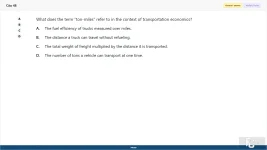
What does the term "ton-miles" refer to in the context of transportation economics?
A. The fuel efficiency of trucks measured over miles.
B. The distance a truck can travel without refueling.
C. The total weight of freight multiplied by the distance it is transported.
D. The number of tons a vehicle can transport at one time.
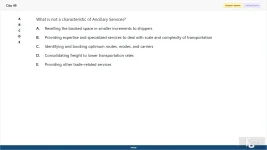
49. (Choose 1 answer)
What is not a characteristic of Ancillary Services?
A. Reselling the booked space in smaller increments to shippers
B. Providing expertise and specialized services to deal with scale and complexity of transportation
C. Identifying and booking optimum routes, modes, and carriers
D. Consolidating freight to lower transportation rates
E. Providing other trade-related services
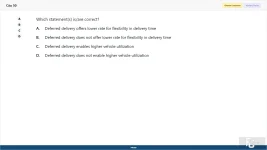
50. (Choose 2 answers)
Which statement(s) is/are correct?
A. Deferred delivery offers lower rate for flexibility in delivery time
B. Deferred delivery does not offer lower rate for flexibility in delivery time
C. Deferred delivery enables higher vehicle utilization
D. Deferred delivery does not enable higher vehicle utilization
Đính kèm
-
 log321_su26_fe_01.webp16.1 KB · Lượt xem: 0
 -
 log321_su26_fe_02.webp27.8 KB · Lượt xem: 0
 -
 log321_su26_fe_03.webp32.1 KB · Lượt xem: 0
 -
 log321_su26_fe_04.webp30.6 KB · Lượt xem: 0
 -
 log321_su26_fe_05.webp18.7 KB · Lượt xem: 0
 -
 log321_su26_fe_06.webp34.6 KB · Lượt xem: 0
 -
 log321_su26_fe_07.webp14.5 KB · Lượt xem: 0
 -
 log321_su26_fe_08.webp25.2 KB · Lượt xem: 0
 -
 log321_su26_fe_09.webp30.8 KB · Lượt xem: 0
 -
 log321_su26_fe_10.webp18.1 KB · Lượt xem: 0
 -
 log321_su26_fe_11.webp31 KB · Lượt xem: 0
 -
 log321_su26_fe_12.webp24.6 KB · Lượt xem: 0
 -
 log321_su26_fe_13.webp14.9 KB · Lượt xem: 0
 -
 log321_su26_fe_14.webp18.1 KB · Lượt xem: 0
 -
 log321_su26_fe_15.webp26.1 KB · Lượt xem: 0
 -
 log321_su26_fe_16.webp33.3 KB · Lượt xem: 0
 -
 log321_su26_fe_17.webp29.3 KB · Lượt xem: 0
 -
 log321_su26_fe_18.webp36.5 KB · Lượt xem: 0
 -
 log321_su26_fe_19.webp26.2 KB · Lượt xem: 0
 -
 log321_su26_fe_20.webp17.2 KB · Lượt xem: 0
 -
 log321_su26_fe_21.webp35.9 KB · Lượt xem: 0
 -
 log321_su26_fe_22.webp20.7 KB · Lượt xem: 0
 -
 log321_su26_fe_23.webp34.6 KB · Lượt xem: 0
 -
 log321_su26_fe_24.webp27.1 KB · Lượt xem: 0
 -
 log321_su26_fe_25.webp35.9 KB · Lượt xem: 0
 -
 log321_su26_fe_26.webp20.5 KB · Lượt xem: 0
 -
 log321_su26_fe_27.webp29.2 KB · Lượt xem: 0
 -
 log321_su26_fe_28.webp27.3 KB · Lượt xem: 0
 -
 log321_su26_fe_29.webp32 KB · Lượt xem: 0
 -
 log321_su26_fe_30.webp47.3 KB · Lượt xem: 0
 -
 log321_su26_fe_31.webp39.1 KB · Lượt xem: 0
 -
 log321_su26_fe_32.webp34.5 KB · Lượt xem: 0
 -
 log321_su26_fe_33.webp18.9 KB · Lượt xem: 0
 -
 log321_su26_fe_34.webp23.6 KB · Lượt xem: 0
 -
 log321_su26_fe_35.webp28.6 KB · Lượt xem: 0
 -
 log321_su26_fe_36.webp27.5 KB · Lượt xem: 0
 -
 log321_su26_fe_37.webp38.8 KB · Lượt xem: 0
 -
 log321_su26_fe_38.webp20.8 KB · Lượt xem: 0
 -
 log321_su26_fe_39.webp24.1 KB · Lượt xem: 0
 -
 log321_su26_fe_40.webp23.7 KB · Lượt xem: 0
 -
 log321_su26_fe_41.webp25.4 KB · Lượt xem: 0
 -
 log321_su26_fe_42.webp15.3 KB · Lượt xem: 0
 -
 log321_su26_fe_43.webp19.9 KB · Lượt xem: 0
 -
 log321_su26_fe_44.webp22 KB · Lượt xem: 0
 -
 log321_su26_fe_45.webp30.5 KB · Lượt xem: 0
 -
 log321_su26_fe_46.webp20.3 KB · Lượt xem: 0
 -
 log321_su26_fe_47.webp26.5 KB · Lượt xem: 0
 -
 log321_su26_fe_48.webp30.5 KB · Lượt xem: 0
 -
 log321_su26_fe_49.webp35.6 KB · Lượt xem: 0
 -
 log321_su26_fe_50.webp29.7 KB · Lượt xem: 0